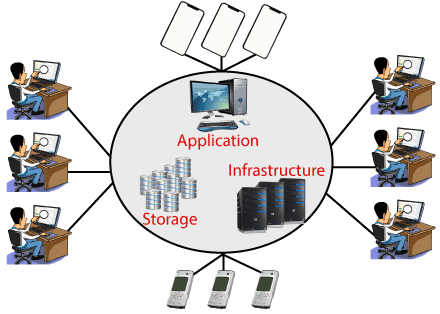
As an alternative to the on-site datacenter, cloud computing is available. With an on-premises datacenter, we have to take care of everything, including buying and installing hardware, setting up virtual machines, installing the operating system and any other programs that are needed, establishing the network, setting up the firewall, and setting up data storage. We are now in charge of sustaining it throughout its whole existence after setting everything up.
But, if we choose cloud computing, a cloud vendor is in charge of the hardware's acquisition and upkeep. Additionally, they offer a huge selection of software and platform as a service. Any necessary services might be rented out by us. The cost of the cloud computing services would vary depending on consumption.
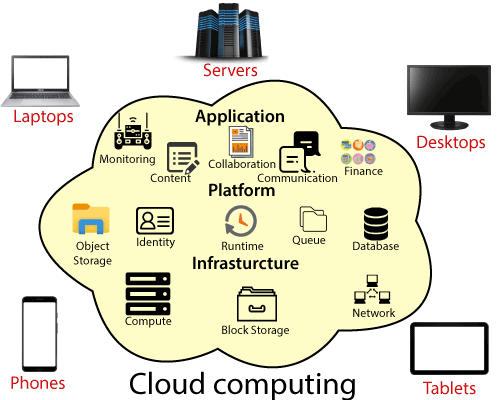
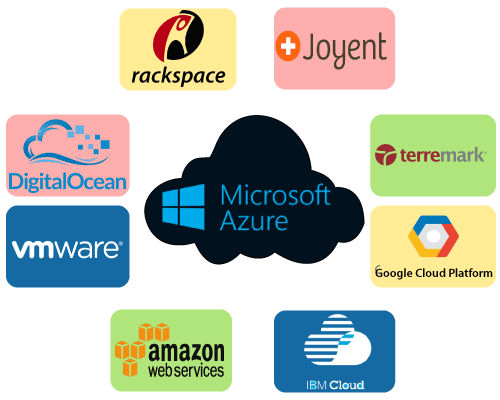
The user may manage the compute, storage, network, and application resources with ease thanks to the cloud environment's conveniently accessible online portal. The following diagram shows a few cloud service companies.
- Cost: It lowers the significant capital expenditures for hardware and software purchases.
- Accessing resources is quick and usually just takes a few clicks.
- Scalability: Depending on the needs of the business, we can raise or decrease the amount of resources needed.
- Productivity: We expend less operational effort when employing cloud computing. We don't need to maintain hardware or software, or even install patches. The IT team may therefore be more productive and concentrate on attaining business goals in this way.
- Reliability: For business continuity, data backup and recovery are less expensive and quick.
- Security: A wide range of policies, technologies, and controls are provided by several cloud companies, strengthening our data security.
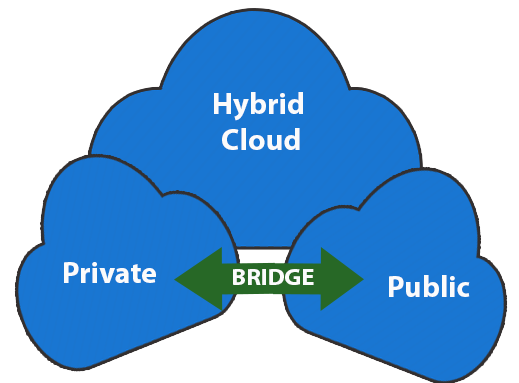
are defined as those cloud resources that are owned and managed by a different cloud service provider. It provides online access to computing resources like servers, software, and storage.
Private Cloud:
The phrase "private cloud" refers to cloud computing capabilities that are only used by one company or organization. A private cloud may be physically housed on the business's premises in a datacenter or it may be hosted by a different service provider.
Hybrid Cloud:
This is a blend of public and private clouds that are linked by technology and permit the sharing of data applications. The business has additional flexibility and deployment options thanks to hybrid cloud.